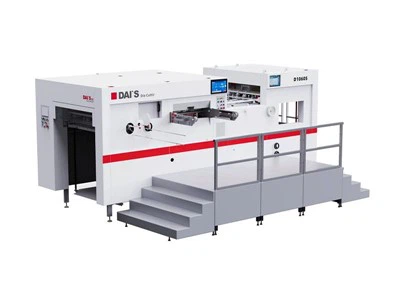
Fully automatic sheet cutter works in continuous, high-speed condition, which will cause different wear and tear to feed, transport, register (positioning), die cutting, crease, feed and so on. Daily maintenance is improper, it is easy to lead to sheet feeding instability, sheet misalignment, incomplete die-cutting, paper jams, equipment unexpected downtime and so on.
Therefore, maintenance should not be limited to reactive maintenance after failure, but should be established for routine inspection and preventive maintenance. Timely cleaning, proper lubrication and inspection of key components help ensure stable operation of equipment while minimizing unnecessary downtime and material waste.

1.Cleaning up paper scraps and dust regularly
The die-cutting process produces a lot of paper scraps, dust and pruning waste. These residues are often piled up on feeding platforms, die-cutting areas, along transport mechanism and in delivery areas.
If not cleaned, paper debris can seep into the driver or stick to sensor surfaces, affecting the operation and detection accuracy of the device.
Therefore, after each production run, paper should be removed from the surface of the machine, with particular attention to feed mechanisms, die cutting machines, transport areas and waste removal areas.
When cleaning precision components such as sensors, appropriate soft tools should be used to avoid damage caused by hard objects.
2.Check the automatic paper feed system
Automatic paper feed system directly affects the die-cutting machine's continuous production capacity.
Check suction mechanism, feed belts, delivery system and paper stack before starting daily. Check for suction instability, double feed, sheet deflection, incorrect feed positioning, etc..
If persistent persistent sheet misalignment are detected, check stack height, suction performance, and transport components immediately, rather than continuing at high speed.
Adjust minor problems in the feeding system in time to prevent large-scale die cutting and registration errors.
3. Check registration (positioning) devices
Before entering the die cutting area, the plates must be aligned in accordance with the registration mechanism.
Loose, worn or improperly adjusted front, side or other positioning components may result in the movement of the die-cutting position. In the course of daily maintenance, can run at low speed, observe whether the paper is stable into the die-cutting area, check whether the positioning element is stable.
If you notice that the die-cutting position is gradually shifting in the same batch of products, you should further inspect the positioning mechanism and transportation system.
4. Monitoring the status of die-cutting tools
Die cutting tool is a key part which affects the quality of the finished product.
The cutting edge may become worn, dull or partially damaged after prolonged use. Continued use of tools in harsh conditions may require additional die-cutting pressure to achieve a clean cut, placing a greater burden on the equipment.
Therefore, the tool should be inspected regularly for edge damage, deformation or unsafe installation.
If you notice incomplete die-cutting, incomplete cutting in some places, or a noticeable decrease in edge quality, inspect the tool immediately rather than simply increasing the die-cutting pressure.
5. Check die-cutting pressure regularly.
Die-cutting pressure is not always better.
Paper of different thickness and materials requires appropriate die-cutting pressure settings. Insufficient pressure can lead to incomplete cutting, while excessive pressure increases the load on equipment and tools.
In the production of different products, according to the specific material and tool conditions to adjust the pressure in order to maintain stability.
If the machine requires a gradual increase in pressure to achieve a satisfactory die-cutting effect, the condition of the tool, backing plate and related mechanical components shall be inspected.
6. Lubricate according to specifications.
Automatic die-cutting machine contains gears, chains, bearings, cams, guides and other moving parts, which can cause friction during use, so it requires to be lubricated according to maintenance guidelines.
Lubrication should not be treated in a "more oil is better" way.
Insufficient lubrication can increase friction and components wear, while excessive lubrication can attract paper dust, or even contaminate paper stock and die cutting areas.
Therefore, lubrication points, intervals and materials in the equipment manual should be observed, and lubrication oil or maintenance schedules should not be changed at random.
7. Inspect transmission components
The transmission system of automatic die cutting machine must run steadily for a long period.
In the daily inspection, check the chain, belt, gear and other components for obvious loosening, abnormal wear or abnormal operating noise. If no abnormal noise, vibration or speed fluctuations is detected during operation of the equipment, it should be stopped immediately for inspection.
Do not continue to operate faulty machines just to meet production schedules; minor problems can escalate into major mechanical problems.
8. Inspection of the pneumatic system and related components
Some automatic paper feeding die-cutting machines use pneumatic systems for paper feeding and auxiliary mechanisms.
Before starting daily production, verify that air pressure is stable and that there is no noticeable leakage of air lines and fittings.
If paper suction performance decreases, paper feeding is unstable, or pneumatic actions slows down, inspect if the system pressure is insufficient, whether the connection is loose, or if the components are malfunctioning.
Maintain a stable pneumatic system to ensure the continuous operation of the automatic paper feed mechanism.
9. Inspect sensors and electrical systems
Automatic die-cutting machines rely on a variety of sensors to monitor the position of paper, the state of equipment and the movement of mechanical components.
Accumulated paper dust accumulating on the surface of the sensor can affect detection accuracy.
Therefore, in the course of routine cleaning, both the surface of the sensor and its mounting position should be checked.
Also, monitor any warning alerts on the control panel. If the machine triggers the same alarm multiple times, don't simply reset it; instead, identify and address the root cause of the alarm.
Frequently Asked Questions
Does the automatic paper feed die cutter need to be cleaned every day?
Basic cleaning is recommended after each production shift-especially in paper feeding, die-cutting and feeding areas-to promptly remove paper scraps and dust.
How often should auto-feed die cutting machines be lubricated?
Lubrication intervals different machines is different, it is necessary to refer to the specific equipment's maintenance requirements. Do not have a uniform lubrication schedule for all machines based on a fixed number of days.
What causes paper feeding instability?
Problems may arise from factors such as paper stacking, suction system, feed belts, pneumatic systems, sensors or registration mechanisms; each component should be examined separately.
What if die is incomplete?
First, check if the cutting mould is worn or damaged. Then, verify that there is no change in die-cutting pressure, substrate or paper material. Simple, dramatic increases in stress are not recommended.
Why do die cutters make so much noise during use?
This could be due to insufficient lubrication, wear on chains or gears, bearing problems or loose mechanical components. If there is any abnormal noise, it should be stopped immediately for inspection.
How does routine maintenance affect die cutting accuracy?
Stable feeding, paper dispensing and die cutting mechanisms are essential to maintain processing accuracy. Periodic maintenance can detect mechanical problems that could affect the quality of paper registration and die-cutting early.
Abstracts
The core of the routine maintenance of automatic paper feeding die-cutting machine is not complicated, involving cleaning of equipment, inspection of paper feeding system and registration device, maintenance of die cutting machine, proper lubrication, inspection of transmission system and pneumatic systems, inspection of sensors, verification of safety device, etc. For businesses engaged in continuous, long-term production, the key is to develop these tasks as standard maintenance protocols, rather than relying on reactive repairs after equipment malfunctions. Effective preventive maintenance can ensure stable paper feeding and die-cutting performance of automatic paper feeder, while minimizing paper jams, dislocation, irregular die-cutting and unexpected downtime.