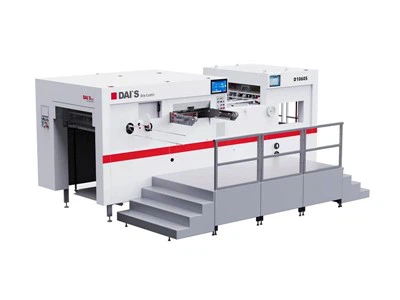
Die-cutting is a core process in post-press finishing. It involves applying pressure to a substrate using a cutting die to execute critical production steps such as carton forming, label cutting, and the creation of uniquely shaped packaging. Historically, the boundaries of die-cutting technology development were defined by traditional materials like paperboard and corrugated board. However, as the packaging industry rapidly shifts toward sustainability, lightweighting, and smart technology, an increasing number of new materials are being introduced into the production chain. While these materials impart novel properties to packaging, they also present unprecedented challenges and requirements regarding die-cutting equipment, die design, and process parameters. Understanding the impact of these new materials is crucial for printing and packaging enterprises to maintain their competitiveness amidst this wave of material transformation.

I. The Impact of Sustainable Alternative Materials on Die-Cutting
Recycled Fiber Paperboard
Recycled fiber paperboard is currently the most mainstream eco-friendly alternative to virgin pulp paperboard; it is manufactured from recycled used cartons and printing waste. Compared to virgin pulp paperboard, recycled fiber paperboard exhibits poorer fiber uniformity and weaker interlaminar bonding. Under die-cutting pressure, it is more prone to delamination (commonly known as "ply separation") and cracking along crease lines. This necessitates finer pressure control in die-cutting equipment and requires die designs to incorporate denser support foam to prevent structural damage caused by localized stress concentration at the crease points.
Paperboard Made from Agricultural By-products (e.g., Bagasse and Bamboo Pulp)
As novel alternatives to wood pulp, paperboards made from bagasse and bamboo pulp feature shorter fibers and surface textures that differ significantly from wood pulp paperboard. During die-cutting, short-fiber paperboard yields edges with lower smoothness and demands sharper cutting blades; even slight blade wear can result in burrs or tearing, thereby increasing the frequency of blade replacement and overall production costs. Furthermore, the moisture content of these paperboards significantly affects die-cutting quality, requiring stricter control of temperature and humidity in the production workshop compared to traditional processes. Biodegradable Bio-based Films (e.g., PLA)
Bio-based films such as polylactic acid (PLA) are widely used in food packaging, yet their die-cutting processability is far inferior to that of traditional BOPP or PET films. PLA is relatively brittle and highly heat-sensitive; excessive die-cutting speeds generate frictional heat that causes localized material softening and deformation, thereby compromising cut quality. Processing these materials requires reducing die-cutting speeds and employing cooling aids to regulate die temperature; some high-end applications even necessitate "cold-knife" die-cutting techniques.
II. Die-Cutting Challenges for Composite and Functional Materials
Aluminum-Plastic Composite Packaging Materials
Composites combining aluminum foil with paper or plastic are widely used for high-barrier packaging in the food and pharmaceutical industries. The presence of the aluminum foil layer requires the cutting blade to simultaneously sever two materials with vastly different hardness and ductility characteristics. This often leads to tearing of the aluminum layer or crushing of the plastic layer, making it difficult to ensure clean, uniform edges. Handling these materials typically requires using harder alloy steel blades and increasing the die-cutting pressure to 1.5–2 times that used for standard paperboard, while also accepting a shorter service life for the blades and scheduling regular die replacements.
Laser-Metallized Paperboard
Laser-metallized paperboard is a common material for high-end gift boxes and packaging for tobacco and alcohol. During die-cutting, the surface metal coating is prone to flaking or peeling due to uneven pressure, which detracts from the visual quality of the finished product. Die-cutting this material requires strict control over pressure uniformity to prevent excessive localized pressure caused by overly rigid ejection rubber; additionally, the placement of cutting lines should ideally avoid areas with the densest metallized patterns.
Release Paper and Self-Adhesive Label Composites
The multi-layer composite structure of self-adhesive labels (facestock, adhesive layer, and backing paper) places extremely high demands on die-cutting precision. The die must cut through the facestock and adhesive layer without severing the backing paper (a process known as "kiss-cutting" or "half-cutting"). The tolerance for cutting depth is typically within ±0.02 mm-far stricter than the precision requirements for standard paperboard die-cutting. Achieving stable "kiss-cutting" (partial cutting) requires die-cutting equipment with extremely high servo control precision, combined with laser thickness gauges to monitor material thickness fluctuations in real-time and dynamically adjust cutting depth parameters.

III. Upgraded Die-Cutting Requirements for New Specialty Materials
Honeycomb Paperboard
Honeycomb paperboard has gained rapid popularity in e-commerce packaging due to its excellent cushioning properties and lightweight nature. The honeycomb core structure allows for significant compression along the Z-axis; consequently, standard flat-bed die-cutting equipment often yields poor results, frequently causing the core to collapse rather than sever cleanly at the cut line. Die-cutting honeycomb paperboard typically requires high-frequency oscillating knives or specialized rotary die-cutting units, utilizing vibration or rolling action instead of traditional flat-bed pressing to minimize structural damage at the cut edge.
Micro-flute Corrugated Board (E, F, and G flutes)
While retaining a degree of cushioning performance, micro-flute corrugated board offers a significantly reduced thickness, leading to its adoption in premium packaging as a replacement for some traditional folding cartons. Its thin corrugated structure is highly sensitive to die-cutting pressure; excessive pressure flattens the corrugated core and compromises the cushioning structure, while insufficient pressure results in incomplete cuts. This necessitates equipment with precise zonal pressure control capabilities and the establishment of dedicated process parameter profiles for different specifications of micro-flute board.
Smart Packaging Substrates with Conductive Ink Printing
With the widespread adoption of NFC anti-counterfeiting and smart labels, some packaging materials now feature embedded conductive ink circuits or antenna structures. When die-cutting these materials, the cutting path must precisely avoid areas containing conductive circuitry; any deviation risks severing the conductive path, causing functional failure across the entire batch. This places demands on the digital design precision of die-cutting plates and the registration accuracy of the equipment that far exceed those of traditional processes; consequently, laser cutting and digital die-cutting are becoming the preferred processing methods for such products. IV. Directions for Technical Upgrades Amidst New Material Trends
To address the diverse challenges posed by new materials, die-cutting technology is rapidly evolving in several key directions: replacing traditional cam mechanisms with servo-driven precision pressure control to enable dynamic, adaptive pressure adjustment for different materials; utilizing non-contact laser die-cutting to replace steel blades-thereby fundamentally eliminating blade wear-which is particularly suitable for the high-precision cutting of films and composite materials; deeply integrating vision registration systems with die-cutting equipment to achieve positioning precision within 0.1mm; and implementing material database management to digitally archive process parameters, facilitating rapid changeovers and consistent reproduction.


FAQ: Frequently Asked Questions
Q1: Can new biodegradable materials (such as PLA films) be processed directly using existing die-cutting equipment?
A: In most cases, existing equipment can be used, but process parameters require adjustment: reducing die-cutting speed, controlling die-board temperature, and ensuring high blade sharpness; some equipment may also require the addition of auxiliary cooling devices. It is recommended to conduct small-batch trial cuts using samples for evaluation before proceeding to mass production.
Q2: How can the frequent delamination occurring during the die-cutting of recycled fiber paperboard be resolved?
A: First, check if the creasing line depth is excessive and appropriately reduce the height of the creasing rule; second, increase the support density of the foam strips on both sides of the creasing line to minimize localized over-pressure; simultaneously, maintain the paperboard's moisture content within an optimal range (typically 8%–12%) to prevent fiber embrittlement caused by excessive dryness.
Q3: Which new materials are best suited for laser die-cutting versus traditional steel-rule die-cutting?
A: Laser die-cutting is ideal for film-based materials (PET, PLA, aluminum foil composites) and smart packaging substrates containing conductive circuits, offering high precision and no blade wear. Traditional steel-rule die-cutting offers higher efficiency and lower costs for thicker materials such as heavy paperboard and corrugated board; each technology has its own specific scope of application.