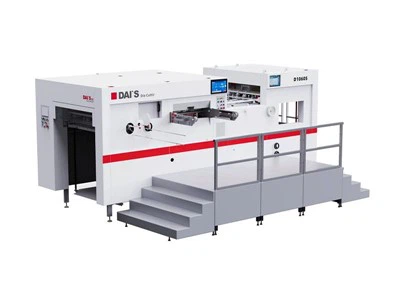
The tilting machine consists of a base and a tilting body connected by a tilting hinge. The machine is connected to the base via the hinge and features a rubber roller in the middle. The roller frame connects to the base, allowing for convenient and quick tilting of goods at any angle. It can also be attached to a conveyor line, employing multi-speed control and limit switches to move goods to the next production line after tilting at any angle. This achieves a three-dimensional flow of goods, eliminating the need for manual labor and overhead cranes, and offering high conveying capacity. The tilting machine is simple in structure, low in cost, highly efficient, and safe and reliable.
Firstly, the design is adapted to different workpiece sizes and weights, with different workpiece fixing devices designed according to the structure of different workpieces. Secondly, during the tilting process, the horizontal movement of the workpiece's center of gravity should be minimized. The workpiece should remain stable during tilting, and noise should be minimized to prevent noise pollution. Energy consumption should be minimized to meet energy conservation and emission reduction requirements. Finally, it must support tilting functions from 0 to 180 degrees and from 180 to 0 degrees.